Story Structure for 30-Second Shorts: Hook, Turn, Payoff
A 30-second story needs three beats: hook, turn, payoff. Here's the second and word budget for each, one annotated script, and a before/after fix for slow openings.
In this article
A 30-second story works as three beats: a hook in the first 3 seconds, a turn (the twist, escalation or reveal) from roughly 3 to 20 seconds, and a payoff in the last 8 to 10 seconds. That's the whole story structure for short videos at this length. The rest is filling each beat without wasting a second.
We've watched pages rewrite the same script three times and get nowhere, because the problem was the order of the beats, not the wording.
The Hook–Turn–Payoff Structure at a Glance
To structure a 30-second story, give each beat a fixed job, a second budget and a word budget, then cut anything that doesn't serve its beat.
| Beat | Seconds | Words (approx.) | Job |
|---|---|---|---|
| Hook | 0–3 | 7–8 | State the stakes or ask the question |
| Turn | 3–20 | 40–45 | 2–4 escalating lines ending in a reversal or reveal |
| Payoff | 20–30 | 25–30 | Resolve it, land the closing line |
The word budget comes from voiceover speed: about 2.5 words per second, so roughly 70–85 words for 30 seconds. Treat that as an approximation. Voice, language and style change it, and a German or Spanish script often runs longer than its English version.
Pacing matters as much as words. Aim for a new beat or visual change every 2 to 4 seconds, with short sentences and no dead air before the payoff. The same skeleton works on Facebook Reels, YouTube Shorts, TikTok and Instagram Reels, because on all four, retention (how much of the video people actually watch) is the signal you're writing for. Check each platform's current length limits, since they change. The YouTube Help page on Shorts is the reference for that format.
Beat 1: The Hook (0–3 Seconds)
The hook is one striking line or image that states the stakes or poses a question, and it has to land inside 3 seconds. That's about 7 or 8 spoken words.
Lead with the outcome, the conflict or the strangest detail. "Everyone walked past this dog for three weeks" works because it raises a question: why, and what changed? A greeting, a channel name or a "today I'm going to show you" spends your only free seconds on nothing.
The hook is also a promise. Whatever it implies, the payoff has to deliver. Bait that the story never answers costs you the next video, not just this one.
Beat 2: The Turn (3–20 Seconds)
The turn is the middle of the story: 2 to 4 short, escalating lines that end in a reversal, a reveal or a complication. It gets about 17 seconds and 40 to 45 words.
Each line should add one new fact and, ideally, one new visual. Think of a staircase. The viewer climbs a step every few seconds and can't see the top.
The last line of the turn carries the surprise, so save it. Don't explain the twist before you show it. If the reveal is "he was hiding a puppy," the line before it can't say "he was protecting something." Cut anything that tells the viewer what's coming.
Beat 3: The Payoff (20–30 Seconds)
The payoff resolves the story and lands one closing line, emotional or surprising, in the final 8 to 10 seconds. That's roughly 25 to 30 words, and fewer is fine.
End on the payoff, not on a call to action. "Follow for more" right after the emotional peak deflates it. If your page needs a follow prompt, put it in the caption or pinned comment.
A closing line that echoes the hook can encourage replays, because the loop feels like a second look. It's a tactic, not a guarantee, and it only works when the echo is natural.
Worked Example: A 30-Second Story Script Broken into Beats
A good 30-second script is about 78 words split 8, 42 and 28 across the beats, and this animal rescue story shows the budget in practice.
Hook (0–3s, 8 words): "Everyone walked past this dog for three weeks."
Turn (3–20s, 42 words): "Then one volunteer noticed he never moved from the same spot. She sat down, an hour a day, and said nothing. On day nine, he finally crept closer. Then she saw what he'd been hiding under the cardboard: a tiny, shaking puppy."
Payoff (20–30s, 28 words): "He hadn't been abandoned. He'd been guarding his puppy, too scared to leave her. Today, they're home together, curled up every night. Nobody walks past him now."
Notice the closing line echoing "walked past" from the hook. Also notice that each sentence in the turn can carry its own visual: the dog, the volunteer sitting, the dog creeping closer, the cardboard reveal. The payoff runs slightly dense, so if your voice is slow, drop the "curled up" line.
The script template you can copy
- Hook (about 8 words): [Outcome, conflict or odd detail, stated as a fact or question.]
- Turn, line 1 (about 11 words): [The new person or event that changes things.]
- Turn, line 2 (about 10 words): [The effort, the escalation.]
- Turn, line 3 (about 7 words): [A shift or complication.]
- Turn, line 4 (about 14 words): [The reveal, saved for last.]
- Payoff (25–30 words): [What it meant, what happened next, a closing line echoing the hook.]
Swap the animal for a hidden talent, a restoration or a kind stranger. The beats stay put.
Common Mistake: Burying the Hook Behind a Slow Setup
The most common mistake in short scripts is opening with context, introductions or "so one day…", which pushes the hook past second 8 and loses viewers who never reach it.
Here's a before:
"So last month, a volunteer at a small rescue near the countryside was walking home past an old bridge when she noticed a dog sitting alone…"
That's about 28 words and 11 seconds before anything interesting happens. Now the after:
"Everyone walked past this dog for three weeks. Then one volunteer sat down."
Same story, 3 seconds. The fix is always the same: take the promise of the payoff and move it into the opening line. Place and date details, the "who" and the "when," can be cut or folded into later lines.
How This Differs from Short-Film Structure
The typical short film follows a three-act structure: setup, confrontation, resolution, with room to introduce characters and build mood. A 30-second short has no room for any of that.
Short films have no hook-first requirement. A film can spend its opening minutes on atmosphere because the audience chose to sit down. A viewer scrolling Reels chose nothing yet, so the hook comes first and the setup gets folded into the turn.
You'll see lists of "7 story structures" too: hero's journey, Freytag's pyramid and so on. They're useful for longer formats. At 30 seconds, the best story structure for short videos is the simplest one: one hook, one turn, one payoff. Short-film templates and the three-act structure are a planning tool for 5 to 20 minutes, not for a vertical clip.
Turning the Script into a Finished Short
To create a short story video from this script, read it aloud against a timer, record or generate the voiceover, then match a visual change to every line.
Read it first. If it runs past 30 seconds, cut words rather than speeding up the voice. Text-to-speech and AI voiceover pacing is where scripts usually fail, so listen for dead air before the payoff and for sentences that need a breath.
Then cut visuals to the lines and add captions. Use footage you own or have the rights to, because originality matters for monetization on every platform, and rules can change.
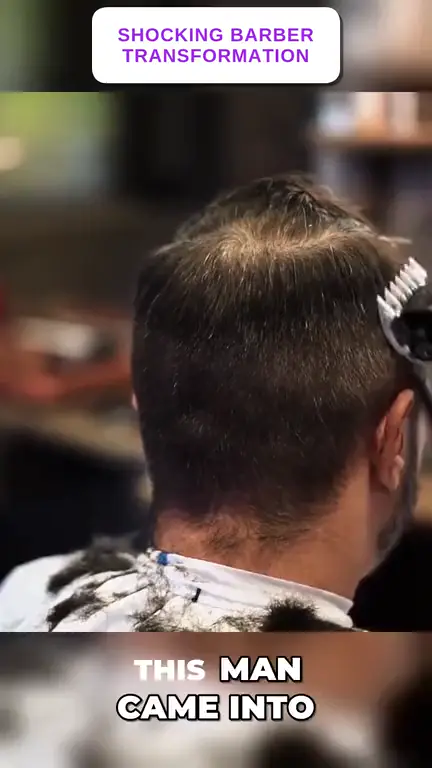
In the WowReveal story-to-Reel workflow, you paste a link or upload a video, it writes the story, voices it in 9 languages, and adds animated captions, a headline, music and a cover in 9:16. The beat budget above still applies: edit the generated script against it before you render.
Frequently asked questions
How long should each part of a 30-second story be?
Roughly 3 seconds for the hook, 17 seconds for the turn and 10 seconds for the payoff. In words, that's about 8, 42 and 25–30. It's an approximation that shifts with voice speed and language.
Should I end a short with a call to action?
End on the payoff. A call to action right after the emotional peak weakens it, so put follow prompts in the caption or a pinned comment. An ending that echoes the hook can encourage replays, but no result is guaranteed.
Where to go next
- Hooks for Reels and Shorts: How to Win the First 3 Seconds — Goes deeper on the hook beat, the one that decides whether anyone sees the rest.
- How to Write a Short-Video Script with AI (Hook, Body, Payoff) — Use AI to draft the script once the structure is clear.
- Story Voiceover Shorts: Structure, Voice and Pacing — Covers voicing and pacing the finished script.
- Short Video Retention: How to Get Reels and Shorts Watched to the End — Explains why the structure affects watch-through.
- AI Story Shorts: The Idea-to-Reel Production System — Places the structure inside the full production workflow.
Generate your reel right now
Paste a link to any video — WowReveal writes the story, voices it and adds captions, a headline and music. Ready for Reels, Shorts and TikTok.
No link? Upload a file
- 30 free credits
- No card needed
- Voiceover in 9 languages
- Failed jobs refunded