How to Choose a Niche Template for Your Reels Page: A Decision Guide
Pick a niche template with a scoring matrix and a two-week pilot, not a gut feeling. Four filters, a keep/change/drop rule, and no earnings promises.
In this article
How to choose a niche template comes down to a process, not inspiration: score every candidate format on four criteria (source availability, rights, competition and your own interest), shortlist two or three, then run a two-week pilot. After 14 days you keep, change or drop each format based on viewing and retention data from your own page.
That's the whole method. The rest of this guide shows how to score, what to record, and which numbers should change your mind. Everything here is a rule of thumb, not a guarantee, and nothing in it promises views or earnings.
Key takeaways
- A niche template is a repeatable production format, not a topic. Choose the format you can make 60 days in a row, not the one that sounds most exciting.
- Score each candidate 1 to 5 on source availability, rights, competition and interest. Anything scoring 1 on rights is out, whatever its total.
- Shortlist two or three formats, then check them against monetization-restricted categories before you film or render anything.
- Pilot each format for 14 days with 10 to 14 posts, the same posting hours and the same production quality.
- Decide with five numbers: average watch time or retention, completion rate, shares, reach to non-followers, and minutes to produce each video.
Niche vs niche template: what you are actually choosing
A niche is the subject your page covers, while a niche template is the repeatable format you use to cover it. Think "animal rescue" as the subject and "rescue story with voiceover, rescuer's name in the headline, 45 seconds" as the template.
Most advice online treats niche as a business question: who is your ideal customer, what are you passionate about, what's your story. That's fine for a blog or a shop. For a Reels page it misses the real constraint, which is production.
You post daily. So the question isn't "what do I love?" but "what can I source, make and publish 30 times a month without breaking rules or burning out?"
The same logic applies if you're choosing for a business page. A brand page rarely needs the most popular format. It needs the one that fits what the business can legally film or license, like street food clips for a restaurant or podcast clips for a show host.
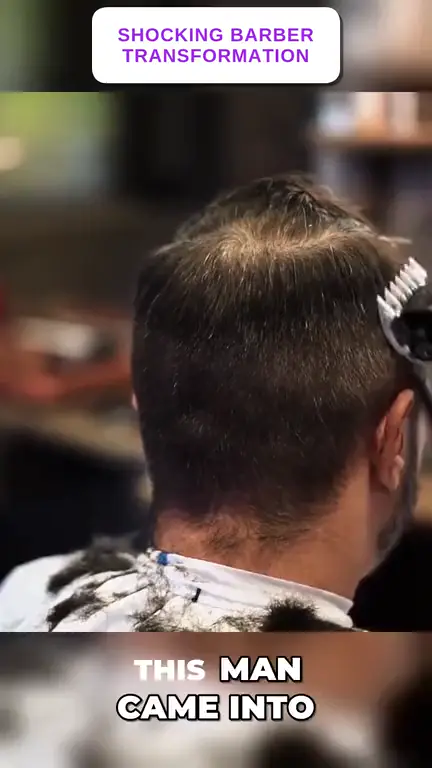
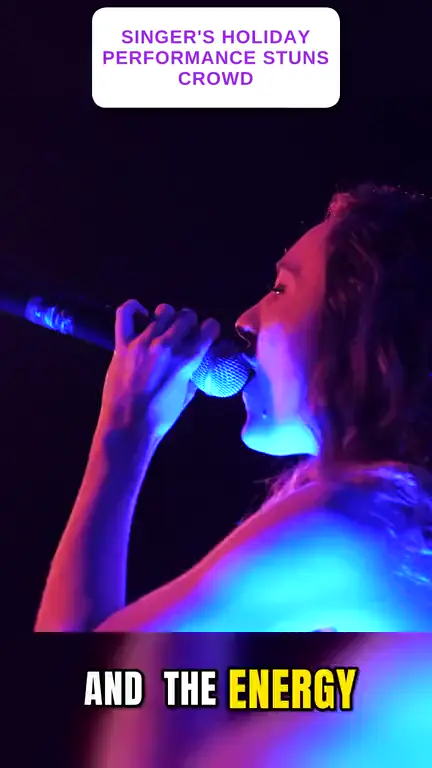
WowReveal's niche templates package this idea: talent shows, haircut transformations, animal rescue, satisfying restorations, sports moments, wholesome kindness, kids' talent, street food, best moments and podcast clips. Each one fixes the structure (headline, captions, pacing, voiceover style), so the choice is about format fit rather than design.
The four criteria for picking a niche template for short videos
Four criteria decide whether a format is workable: source availability, rights, competition and your interest. Score each from 1 (bad) to 5 (good), and be harsh. A format that scores well on three and 1 on rights is a bad format.
Source availability: can you find fresh material every day?
A format scores high on source availability when you can find or create at least one usable new clip every day without scraping the bottom of the barrel. The test is simple: could you list 10 usable sources right now, in 15 minutes?
Score 5 if material is abundant and varied. Score 1 if you'd run dry in a week or keep featuring the same three clips.
Own filming is a source too. A barber who films transformations or a cook who films street stalls has a supply nobody else has. If you work from long videos, an AI Clipper that finds the best moments in a podcast or interview widens supply a lot, because one hour of material can yield several shorts.
Rights: can you use the footage safely?
Rights score high when you shoot the footage yourself, license it, or have written permission from the owner. Score 1 when the footage belongs to a broadcaster, league or studio and you have no permission. That's a hard stop.
Reposting other people's videos as they are is the fastest way to lose reach, and eventually monetization. We've watched pages lose weeks of distribution after reposting a single unoriginal clip. Adding your own narration and real transformation helps, but it doesn't turn unlicensed footage into licensed footage.
Read the current rules on reused content and originality before you commit. Meta explains its guidance in the Meta business help center, and YouTube covers eligibility in the YouTube Partner Program overview. Platform rules change, so check them on the day you decide.
Also think about Content ID on YouTube and similar matching systems elsewhere. Music, sports broadcasts and TV shows are matched automatically, and no clever edit is a safe answer to that.
Competition: how crowded is the format, and can you differ?
Competition scores high when the format has room for a distinct angle, not necessarily when few pages use it. Crowded formats can still work if you have a clear difference, such as language, region, tone or a recurring character.
Check this by searching the format on Facebook Reels, TikTok and YouTube Shorts, and scroll 30 results. Do 25 of them look identical, with the same clip, same caption style and same voice? Score 1 or 2. Do you see variety and gaps, such as no content in your language? Score 3 to 4.
An empty format isn't automatically good. Sometimes nobody posts it because nobody watches it.
Your interest and stamina: can you post this 60 days in a row?
Interest scores high when you could produce the format for 60 days and still find new things to say. It's the least scientific criterion, and the one that kills most pages.
Ask two questions. Would you watch this yourself, unprompted? And could you write 10 different headlines for it today? If the second answer is no, your supply of ideas, not your supply of footage, will stall you.
Don't overweight it though. A format you merely like but that scores 1 on rights is a hobby, not a page.
Niche template comparison: how the common formats score
The 10 WowReveal templates score very differently on supply and rights, and that spread is the main reason to compare them before you pick. Rights are usually the deciding factor, because competition changes every month while ownership of footage doesn't.
A scoring table for the 10 WowReveal templates
These scores are illustrative, based on a typical new page with no special access to footage. Yours will differ, so rescore using your own sources. Competition is scored so that 5 means less crowded.
| Template | Source availability | Rights | Competition | Main watch-out |
|---|---|---|---|---|
| Talent show | 4 | 2 | 2 | Broadcaster-owned footage, Content ID matches |
| Haircut transformations | 3 | 4 | 3 | Needs your own filming or a barber's permission |
| Animal rescue | 4 | 2 | 2 | Clips belong to rescuers; ask before using |
| Satisfying restorations | 4 | 3 | 3 | Many clips are owned by workshop channels |
| Sports moments | 5 | 1 | 1 | League and broadcaster rights, heavy matching |
| Wholesome kindness | 4 | 3 | 2 | Staged or re-uploaded clips with unclear origin |
| Kids' talent | 3 | 2 | 2 | Child privacy, parental consent, platform sensitivity |
| Street food | 3 | 4 | 3 | Strong if you film or partner with vendors |
| Best moments | 4 | 3 | 3 | Depends entirely on the source you pick |
| Podcast clips | 4 | 4 | 4 | Needs your own show or written permission |
Read the table for the pattern, not the totals. The podcast clips template and the street food template score well because you can own or license the source. The talent show template and sports score badly on rights unless you have an arrangement with the rights holder.
That doesn't mean "never touch them." It means you must solve rights first, for example with permission from the performers or the production company.
Why "hot right now" is a weak criterion
"What niche is hot right now" is a bad way to choose, because a format that's hot today is crowded within weeks and your first 30 videos arrive after the wave. Also, hot formats tend to attract unlicensed footage, which raises your rights risk.
Use a trend finder as a supporting check, not a decision-maker. It's good for spotting which angles inside your shortlisted format are moving, or whether a format is fading. It can't tell you whether you can source, license and sustain it.
The same goes for "top 5 niches" or "big 3 niches" lists. They describe what's popular, not what's workable for you. Treat them as a source of candidates, then run them through the four criteria.
How to shortlist two or three formats
To shortlist, add up the four scores for each candidate, drop anything that scored 1 on rights, and keep the top two or three. That's the entire method for narrowing down a niche for your Reels page.
Do it on paper or in a free spreadsheet. You don't need paid software to compare templates. If you want to test a format without spending, WowReveal gives free credits to start with no card, enough to render a few trial videos from a template.
Aim for three candidates with different strengths. One high-supply format, one high-rights format and one wildcard you're curious about gives you a real comparison. Three near-identical formats teach you little.
If two candidates tie, pick the one with the lower production time. Effort is the cost you pay every day, and a format that takes 10 minutes beats one that takes 45 at equal performance.
Check monetization-restricted categories first
Before you pilot anything, confirm that your shortlist doesn't sit in a category that can limit or block monetization. Meta publishes its content monetization policies and eligibility in the business help center, and both Facebook content monetization and the YouTube Partner Program have categories and originality requirements that can restrict reuse of other people's content.
Kids' content, violence, news-like material and anything with unclear footage ownership deserve a second look. It's much cheaper to drop a format on paper than after 30 videos.
Only the platform decides eligibility. Don't assume a format is safe because other pages post it.
Run a two-week pilot of several formats
A two-week pilot is the cleanest way to compare formats, because it gives you 10 to 14 posts per format under the same conditions. Three posts tell you nothing. Fourteen start to show a pattern.
Pilot setup: posts per format, same hours, same quality
Post an equal number of videos per format, at the same times each day, with the same level of polish. If you give your favorite format better hooks and nicer covers, you've rigged the result.
A simple setup for three formats:
- Post one video per format per day for 10 to 14 days.
- Keep posting hours fixed, for example 12:00, 17:00 and 20:00, and rotate the slots so no format always gets the best hour.
- Keep length in a narrow band, such as 30 to 45 seconds, and always use 9:16 vertical video at 1080×1920.
- Use the same caption style, the same cover approach and the same headline length.
- Don't touch the formats mid-pilot, even if one flops early.
If three videos a day is too heavy, pilot two formats instead. Equal counts matter more than a large number of formats.
What to record each day
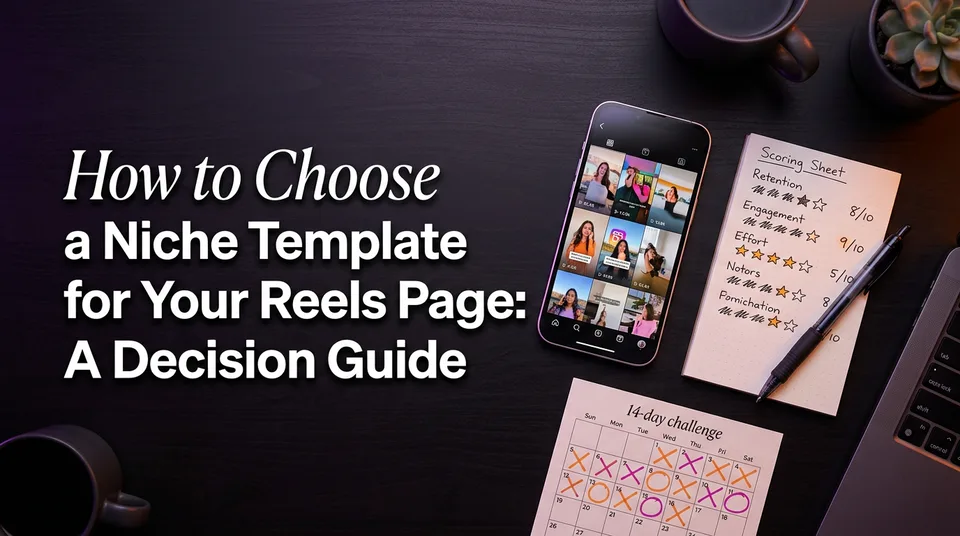
Record the same five numbers for every video, 24 to 48 hours after posting, so the data is comparable. A simple table with one row per video is enough.
- Average watch time or retention rate (the share of the video people watch)
- Completion rate (how many viewers finish)
- Shares
- Reach to non-followers
- Minutes you spent producing the video
The fifth one is the one people skip. A format that performs slightly better but takes three times as long is often the worse choice. Meta Business Suite and the native analytics on each platform show the first four, so you don't need extra tools.
Keep, change or drop: signals that decide
After 14 days, compare each format to your page's own baseline: keep it if it beats the baseline on retention and one other signal, change it if the weakness is fixable, and drop it if it isn't. All thresholds below are rules of thumb, not guarantees, and they depend on how large your page is.
Signals to keep
Keep a format when it shows decent retention and at least one growth signal, without costing too much time to make.
- Average watch time or completion above your page's median across the pilot
- Shares higher than the other pilot formats, since shares usually travel furthest
- A visible share of reach going to non-followers
- Production time that you can sustain daily, say under 30 minutes
One strong metric alone isn't enough. A format that only wins on reach but loses viewers in the first three seconds is a hook problem, not a keeper.
Signals to change (hook, source, length)
Change the format when one specific part is clearly the problem and the rest looks good. Make one change at a time, then run another week.
- Viewers leave in the first 3 seconds, so rewrite the hook or the headline
- Good views but weak completion, so shorten the video or tighten the story
- Performance swings wildly by source, so keep only the best sources
- Good numbers but heavy production time, so move more steps to automation
This is where a story-driven workflow helps. In WowReveal you can regenerate the story and AI voiceover, or pick different best moments, without rebuilding the video.
Signals to drop
Drop a format when the problem is structural. If you can't fix it with a better hook or a different clip, stop spending days on it.
- Bottom of the pilot on retention and shares after 10 or more posts
- Almost no reach to non-followers, meaning the platform isn't pushing it
- Source supply drying up before day 14
- Any rights doubt you can't resolve, which means drop at once, regardless of performance
- Production time that stays above what you can sustain
Dropping isn't failure. It's the cheapest result the pilot can give you.
For more on what the retention numbers mean, read about the signals that make Reels and Shorts get watched to the end. You'll use the same ones here.
Choosing for agencies and multi-page setups
Agencies should give each page its own format, or at least its own angle within a format, so the pages don't compete and don't look like copies. Running the same template across five pages with the same sources is how you get flagged for duplicate or unoriginal content.
A workable approach: run the four-criteria scoring once per client, not once per agency. A client with access to their own footage can use a high-rights format that your other clients can't.
Then split pilots across pages. Instead of testing three formats on one page, you can test one format per page for 14 days, as long as pages have similar audiences and posting times. Compare each page to its own baseline, not to the other pages.
Keep a shared sheet with page, format, source, posting time and the five metrics. When a new client arrives, you'll know in a day which formats have worked in similar pages and which haven't.
Common mistakes when choosing a niche template
The most common mistakes are chasing trends, skipping the rights check, judging after three posts and mixing formats. All four feel productive and all four give you bad data.
- Chasing what's hot. You arrive late, face the most competition and pick up the most reused-content risk.
- Skipping the rights check. A format with great views and no license is a delayed problem, not a solved one.
- Judging after three posts. Early numbers are noise. Wait for 10 or more per format.
- Mixing formats on one page mid-pilot. If a video fits two templates, you can't tell which one caused the result.
- Ignoring production time. The best format on paper can still be the one you stop making in week three.
- Copying someone else's scorecard. Their access to sources isn't yours.
How do you know when you've found a winning niche? When a format keeps beating your baseline on retention and shares across at least 10 posts, you can source it daily, and you still want to make it on day 60. Any earnings that follow are estimates and up to the platforms.
Your next step: build the pilot
Your next step is to write your shortlist and set up a 14-day pilot this week, not to keep researching. Pick two or three formats from your scoring, and write down their 10 to 14 planned posts per format before you start.
Here's a practical way to start:
- Score all 10 templates from the table using your real sources.
- Remove anything with a rights score of 1.
- Check the survivors against monetization policies.
- Open a template for each of the top two or three and render a first video.
- Start the 14-day schedule and log five numbers per video.
If you use WowReveal, the niche templates handle the structure (story, voiceover in 9 languages, captions, headline, music, cover, 9:16 render), so the pilot is mostly about picking sources and comparing results. The free credits are enough to test a format before you commit to a plan.
On day 15, sit down with the data and apply the keep, change or drop rules. Then pick one format, run it for a month, and validate it further with more data.
Frequently asked questions
How do I pick a niche for my Reels page?
Score candidate formats from 1 to 5 on source availability, rights, competition and your interest. Shortlist the top two or three, check them against monetization policies, then run a 14-day pilot with 10 to 14 posts per format. Keep the one whose retention and shares beat your baseline.
How do I know if I've found a winning niche?
A winning format keeps beating your page's own baseline on retention and shares across at least 10 posts, reaches non-followers, and takes a production time you can sustain. These are rules of thumb, not guarantees, and the platform decides how far a video travels.
What niche is hot right now, and should I follow it?
Hot niches change quickly and are usually crowded by the time you publish. Use a trend finder to spot angles inside a format you've already scored, but don't pick a format only because it's trending. Rights and sustainability matter more than hype.
Can I choose a niche template for free?
Yes. Scoring and shortlisting need only a spreadsheet, and the pilot needs your page analytics. WowReveal also gives free credits to start without a card, enough to render a few test videos from a template before you pay for anything.
How many posts do I need before dropping a format?
Aim for 10 to 14 posts per format under the same conditions. Fewer than 10 is mostly noise. The exception is rights: if you find you can't use the footage safely, drop the format immediately, whatever the numbers say.
Where to go next
- What Is a Niche Template for Shorts? — Start here if the idea of a niche template as a repeatable format is new.
- Niche Short-Video Formats: A Page Owner's Format Library — The full list of formats to score before you shortlist.
- Best Niches for Facebook Reels: How to Choose One That Fits Your Page — The platform-specific view of niche fit on Facebook.
- Content Categories That Can Block Monetization on Facebook — Filter your shortlist for monetization safety before the pilot.
- Short Video Retention: How to Get Reels and Shorts Watched to the End — Explains the retention signals behind the keep, change or drop decision.
- Niche Templates for Reels: Repeatable Formats for Daily Posting — Shows how the format you pick runs in daily production.
- How to Validate a Facebook Niche With Data Before You Commit — A deeper validation method once your pilot picks a winner.
- Best AI Video Clipper: Features to Compare Before You Choose — Useful if your chosen format relies on clipping long videos into best moments.
- How to Batch Create a Week of Shorts and Reels in One Sitting
- Facebook Monetization Violations: What Gets a Page Restricted
- What Is Facebook Professional Mode? Definition, Setup and Page Differences
- Best Time to Post Reels on Facebook (and How Often to Post)
Generate your reel right now
Paste a link to any video — WowReveal writes the story, voices it and adds captions, a headline and music. Ready for Reels, Shorts and TikTok.

No link? Upload a file
- 30 free credits
- No card needed
- Voiceover in 9 languages
- Failed jobs refunded