What Makes a Moment Clip-Worthy: Emotion, Surprise, Payoff
A good Short is a moment, not a summary. Learn the four signals that make a moment clip-worthy and where to cut so viewers stay to the payoff.
In this article
What makes a good clip for shorts is a moment with a clear emotion, surprise or tension that pays off within seconds. Start the clip on that moment, not on the setup, and end it right after the payoff lands.
Everything else, from captions to music, is polish on top of that choice.
The short answer: emotion, surprise, tension, payoff
A clip-worthy moment carries at least one of four signals: emotion, surprise, tension or payoff, and the strongest clips stack two or three. Those four explain why one 20-second cut holds viewers while another gets swiped in the first second.
The rule holds across YouTube Shorts, TikTok, Instagram Reels and Facebook Reels. The algorithms differ, but the viewer behaves the same way everywhere: stay if something is happening, leave if nothing is.
"Funny" isn't a signal on its own. A funny clip works because of surprise (the turn) plus payoff (the punchline). A good Twitch clip works the same way: the streamer's reaction is the emotion, the in-game event is the surprise.
The four signals of a clip-worthy moment
Each signal is checkable, meaning you can point to the exact second where it happens. If you can't find that second, you don't have a clip yet.
Emotion
Emotion is a visible or audible human reaction the viewer can feel without context. Think of a talent-show judge's jaw dropping, a streamer screaming after a clutch win, or a rescued dog's first reaction to its new owner. Faces and voices carry it, so check that both are in frame and clear.
Surprise
Surprise is a turn the viewer didn't see coming. A calm podcast answer that suddenly contradicts the host's premise counts. So does a plot twist, a missed shot that somehow goes in, or a "before" that turns into a startling "after."
Tension
Tension is an open question the viewer wants answered. A rescue where the animal is stuck and the rope is still slack. A quiet pause before a verdict. A last-second play. Tension buys you attention, but only if the answer arrives soon.
Payoff
Payoff is the moment the question gets answered: the punchline, the reveal, the catch, the hug. It's the reason the clip exists. A clip with strong setup and no payoff feels like a trailer for something the viewer can't watch, and they leave annoyed.
Where to start the clip: open on the moment, not the setup
Start the clip on the first frame of action or emotion, or at most one beat before it. The most common mistake we see is opening with the intro, the "so, before we get into it" or the 8 seconds of context, because the full video needed it.
A Short doesn't need it. The viewer has a thumb and no loyalty. Your hook, the first second or two that earns the next five, should be the moment itself or a hint of it.
Fix it by trimming to the first frame where something happens. Then move the context into a caption or headline: "He had 3 seconds left" does the work of 20 seconds of buildup. For more hook tactics, the related guide below goes deeper.
Where to end the clip for completion rate
End the clip right after the payoff or reaction lands, with no trailing dead air. Completion rate, the share of viewers who watch to the end, drops when a clip lingers after the point is made.
Cut on the laugh, the gasp, or the beat after the reveal, then stop. Don't add a fade-out, a "thanks for watching" or a recap. If the payoff takes 25 seconds to reach, the clip is as long as it needs to be. If it takes 8, the clip is 12, not 30. We deliberately don't give a fixed number here, because length follows the moment. The length guide in the related links covers ranges.
Good clip vs bad clip: a side-by-side example
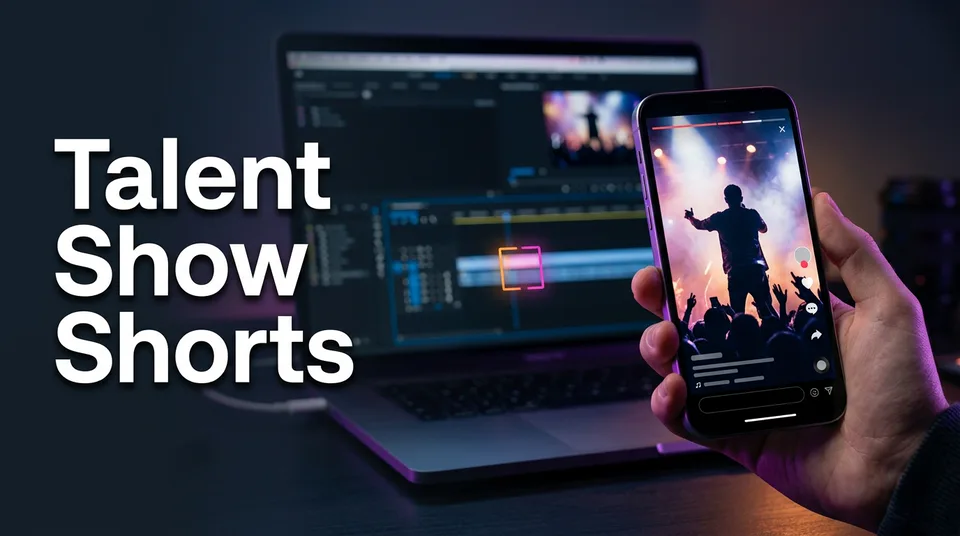
The same source video can make a clip viewers swipe or one they finish, depending only on where you cut. Take a 40-minute talent-show episode with one standout audition.
| Clip A (weak) | Clip B (strong) | |
|---|---|---|
| Starts at | Host introducing the contestant | The first note, with judges visible |
| Includes | Backstory, small talk, full song intro | Short caption: "Judges expected nothing" |
| Peak moment | Buried at the 70% mark | Lands within the first third |
| Ends | After the host's closing remarks | One beat after the judges' reaction |
Clip B holds viewers because tension starts immediately, surprise and emotion arrive fast, and nothing follows the payoff. Clip A makes the viewer wait for the reason to stay.
One caution: if the footage isn't yours, clipping it isn't automatically allowed. Get permission or licensing first, and don't rely on tricks to dodge originality checks or Content ID.
A 5-question test before you export
If a clip fails two of these questions, re-cut it or pick another moment. Run it on every clip, no matter how short or how good the source.
- Can I name the exact second the emotion, surprise or tension starts?
- Does the clip open on that second, or within one beat of it?
- Does the payoff arrive before the viewer would reasonably give up?
- Does the clip stop within a beat of the payoff?
- Does it make sense with zero context, using only the caption or headline?
Then check the results. In YouTube Studio, Shorts analytics and viewer retention show how long people watch and where they drop off. Look at average view duration and the retention curve, and compare clips cut differently. Analytics are estimates and platform tools change, so treat them as a guide, not a guarantee.
How AI highlight detection applies the same criteria
AI highlight detection looks for the same signals a human editor does, just faster. It scans for audio spikes, laughter, speech intensity, visual change, faces and scene shifts, then ranks segments by how likely they are to hold attention.
That's how an AI Clipper such as WowReveal's, or a tool like Opus Clip, can find candidates in a 2-hour stream or podcast in minutes. It's also how you find clips for YouTube Shorts without scrubbing a timeline: let the tool propose five or six moments, then judge each with the test above.
The tool picks candidates. You still decide. AI can't know that a pause is tension or that an inside joke needs context, so review every cut. Good source footage matters too: a video with no real moments gives even the best detector nothing to find.
Frequently asked questions
How do I choose the best part of a video for a short?
Find the moment with the clearest emotion, surprise or tension that pays off within seconds. Start on that moment, end right after the payoff, and run the 5-question test before exporting.
Do the same rules apply to YouTube Shorts and TikTok?
Yes. Both platforms measure whether viewers stay, so a clear moment, a fast hook and a clean ending work on both. Platform algorithms and rules change, so check each one's official help pages.
Can I clip any streamer's or show's video for Shorts?
Not automatically. Third-party footage usually needs permission or a license, and reposting without it can get your page limited. Clip your own material or content you have rights to use.
Where to go next
- Choosing the Right Source Video for AI Clipping — Start with footage that actually contains clip-worthy moments.
- What Is Best-Moment Clipping? Definition, Scoring and Clip Length — See how moments are scored, which extends these four signals.
- Hooks for Reels and Shorts: How to Win the First 3 Seconds — Go deeper on opening on the moment.
- How Long Should a Clip Be for Shorts and Reels? — Pair your end points with length guidance.
- What Is a Good Retention Rate for Shorts? Benchmarks and How to Read Them — Check whether your clip choices worked.
Generate your reel right now
Paste a link to a long video — AI finds the best moments and turns them into ready Shorts with captions.
No link? Upload a file
- 30 free credits
- No card needed
- Voiceover in 9 languages
- Failed jobs refunded