Faceless Shorts Niche Ideas That Work with AI Voiceover
Ten faceless niches for Shorts, Reels and TikTok, each scored on AI voice fit, saturation and policy risk, so you pick by fit instead of income hype.
In this article
The faceless shorts niche ideas that work best with AI voiceover are narration-led ones: story and mystery, facts and explainers, tips and how-to, curated clip commentary, and compilations with a voiced story. The best pick is a niche where the voice carries the value and you can bring an original angle or edit of your own.
That second half matters more than the niche name. Two pages can run in the same niche, and one gets traction while the other gets flagged as repetitive. The difference is almost always what the creator added.
Key takeaways
- Narration-led niches suit AI voiceover best, because the script is the product and the voice only delivers it.
- Score every niche on three axes before committing: voice fit, saturation, and policy risk.
- Clip-based niches like animal rescue or restorations work, but only with footage you have the right to use and a story you wrote yourself.
- Podcast clips, personal reviews and emotionally heavy topics usually need a human voice or presence.
- Test any niche with 10 to 15 videos and watch viewed vs swiped away and average view duration before you scale.
- Nobody can promise income from a niche. Earnings depend on views, eligibility and program rules.
What Makes a Faceless Niche Work with AI Voiceover
A faceless niche works with AI voiceover when the value sits in the words and the pacing, not in the speaker's personality. If a viewer would still enjoy the video with a different narrator, an AI voice is a safe fit.
Four criteria separate a durable niche from a short-lived one:
- The voice carries the value. A gripping story, a surprising fact, a clear tip.
- The format repeats. You can produce the same structure 5 to 7 times a week without reinventing it.
- You have an original angle. Your script, your selection, your commentary, your edit.
- It stays monetization-safe. No borrowed footage passed off as yours, no copyrighted music, no misleading claims.
We've watched pages lose reach for weeks after leaning on one unoriginal clip with a generic caption. The niche was fine. The execution had no fingerprints on it.
The three-axis check: voice fit, saturation, policy risk
Voice fit asks whether an AI voice delivers this niche well, delivers it with caveats, or whether it needs a human. Saturation asks how many channels already do the same thing the same way. Policy risk asks which rule could bite you: reused content, AI labeling, music copyright or sensitive topics.
Score each from 1 to 3 on paper. A niche that scores well on voice fit but badly on both others is a trap, and a lot of "easy" lists hide exactly that.
Faceless Shorts Niche List: Categories That Suit Narration
These eight categories cover most faceless YouTube Shorts ideas that suit narration, and each comes with a repeatable format. Pick one, not all of them.
Story and mystery narration
Short narrated stories: unexplained events, strange histories, twist endings, "what happened next" tales. Example video: a 45-second retelling of a forgotten shipwreck, opening on the one detail nobody can explain. The script does everything, which makes this the most natural home for AI voiceover. It's also crowded.
Facts and explainers
One surprising fact, explained in under 60 seconds. Example: why airplane windows have a tiny hole in them. The format is easy to template, and the angle is your selection. Pick a narrow topic like ocean life, old inventions or human body trivia rather than "random facts."
Tips, how-to and personal finance basics
Practical advice delivered as numbered steps: phone battery habits, budgeting basics, productivity tricks. Example: three ways to cut a phone bill. Keep finance at the general-information level. Specific investment or tax advice is risky, and viewers can tell when a voice has no accountability behind it.
Animal rescue and wholesome stories
Rescue stories, kind strangers, small acts that made someone's day. Example: a narrated story of a dog's rescue, built on footage you licensed or filmed. The audience is huge on Facebook Reels especially. The catch is sourcing: footage must be yours, licensed, or used with permission.
Satisfying restorations and transformations
Rust removal, rug cleaning, haircut transformations, furniture rebuilds. Example: a before-and-after of a pressure-washed driveway with a short voiced story about how it got that dirty. Many of these work with captions and sound alone, so the voice is optional, but a short narrated hook lifts retention.
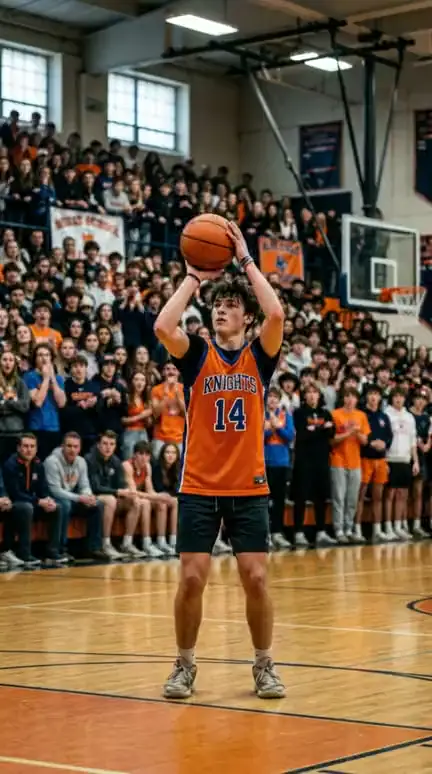
Sports moments and best-moment commentary
Highlights with your own commentary and context. Example: the one play from a match that changed its direction, explained in 30 seconds. Rights holders are aggressive here, so this niche rewards original analysis and punishes simple re-uploads.
Street food and travel stories
Vendors, recipes, markets, small towns. Example: the history behind a street snack, told over footage you shot or licensed. Lower saturation than stories or facts, and the narration adds the cultural context the footage can't show alone.
Podcast and interview clips
Best moments cut from long conversations. Example: a 40-second answer pulled from an interview you have permission to clip. Here the original speaker's voice is the value, so an AI voice replaces the one thing viewers came for. Use captions, a headline and a sharp cut instead.
Which Niches Suit an AI Voice and Which Need a Human
AI voice suits niches where the script is the product, works with caveats where footage or rights complicate things, and fails where personality is the product. That sorting is the quickest way to cut a long list down.
| Niche | AI voice fit | Saturation | Main policy caution |
|---|---|---|---|
| Story and mystery | Fits | High | Reused footage, AI labeling for realistic visuals |
| Facts and explainers | Fits | High | Accuracy, unoriginal scripts |
| Tips and finance basics | Fits | High | Sensitive advice, misleading claims |
| Animal rescue / wholesome | Caveats | Medium to high | Footage permission, reused content |
| Satisfying restorations | Caveats | Medium | Footage permission, music |
| Sports moments | Caveats | High | Rights holders, Content ID |
| Street food and travel | Caveats | Lower to medium | Footage ownership |
| Podcast and interview clips | Needs human voice | Medium | Permission to clip, reused content |
Strong fit for AI voiceover
Story, facts and tips. The listener follows an idea, not a person. Pacing and script quality decide the result, and a good AI voiceover in a clear tone is entirely adequate. Choose a voice that matches the mood and keep it consistent, so the page builds a recognizable sound.
Works with caveats
Animal rescue, restorations, street food and sports. The voice is fine, but the footage is the risk. If you didn't shoot it, license it or get permission, the narration won't save you. And if the video barely changes from the source, a voiceover on top doesn't count as transformation.
Better with a human voice or presence
Podcast clips, product reviews, grief or health stories, and anything where trust depends on a real person. A synthetic voice reading a first-person confession feels off, and viewers swipe. If the niche sells "I tried this," you need a real "I."
Saturation and Policy Risks by Niche
Faceless YouTube is still a workable format, but it's no longer an easy one, and the channels that struggle are mostly the ones copying each other. Profitability depends on views, eligibility for the YouTube Partner Program and the rules in force when you apply, none of which anyone can guarantee.
That also answers the "how do I make $10,000 a month without making videos" question honestly: some creators earn well, most don't, and no niche list changes that. Read the monetization article linked below for the policy side instead of trusting income screenshots.
Reused content and originality
YouTube's rules target mass-produced, repetitive and unoriginal material, and the wording has shifted over time (it's now often discussed as "inauthentic content"). The safe rule: your script, your selection, your edit, your commentary. Check the current YouTube Partner Program overview for eligibility and policy links, because thresholds and wording change.
Clip niches carry the most exposure. Sports, animal rescue and podcasts all start with someone else's footage, so permission and added value aren't optional.
AI labeling and sensitive topics
YouTube asks creators to disclose realistic altered or synthetic content that could mislead viewers. An AI voice reading a clearly fictional story is different from an AI-generated "real" news scene. Read the YouTube Help page on disclosing altered or synthetic content and apply AI labeling wherever the visuals could pass as real events.
Sensitive topics are their own category. Health, finance, tragedies and real people's names deserve extra care. Don't invent facts, and don't put fabricated quotes in a real person's mouth.
Music and copyright
Copyrighted songs trigger Content ID claims, which can mute, block or redirect revenue from your video. Use music from the platform's own library or tracks you have rights to, and don't hide a song under pitch or speed changes. That trick is exactly what detection systems are built to catch, and it's unsafe advice.
Faceless Niches by Platform: Shorts, Reels and TikTok
Most narration-led niches transfer across YouTube Shorts, Facebook Reels, TikTok and Instagram Reels, but audiences and rules shift. The 9:16 format is the same. The viewer mood isn't.
- YouTube Shorts: Facts, stories and how-to travel well. Search-driven topics have a longer tail, and the YouTube Partner Program is the monetization route.
- Facebook Reels: Wholesome, rescue, transformation and nostalgia stories tend to fit, and Facebook content monetization has its own eligibility rules and originality requirements, which Meta updates from time to time.
- TikTok: Fast, trend-aware facts and story hooks, with captions that feel native. Faceless shorts niche ideas on TikTok lean toward quicker pacing and more personality in the text.
- Instagram Reels: Visual niches like restorations, food and aesthetic transformations do well, with shorter voiceovers.
The practical move: make one master video, then adjust the hook, caption length and music per platform. Don't upload an identical file everywhere and expect identical results.
Best Faceless Niches for Beginners and Low-Competition Angles
The best beginner niche is the one you can stay interested in for 90 days, with material you can source legally and a format you can repeat. Interest and sourcing beat trend-chasing every time.
Use this four-point filter:
- Interest: Could you read 30 scripts on this topic without boredom?
- Source availability: Do you have footage, images or facts you're allowed to use?
- Repeatable format: Can you describe the video structure in one sentence?
- Original value: What will your video have that a copy wouldn't?
For beginners, facts, tips and street food or travel stories are usually the gentlest start. Story and mystery is the most tempting and the most crowded.
Narrowing a broad niche into a sub-niche
Low competition comes from narrowing, not from finding a secret category. "Facts" is saturated. "Facts about medieval food" is a channel. "Money tips" is saturated. "Money tips for first-time renters" is a channel. Shrink by audience, era, region or problem until you can name the exact viewer.
How to Test a Faceless Niche in One Week
Test a niche by posting 10 to 15 short videos in a single format and judging the results on retention, not on one lucky spike. One video proves almost nothing, and 10 to 15 begin to show a pattern.
The plan:
- Write 10 to 15 scripts around three or four sub-topics.
- Post one format only: same length, same voice, same caption style.
- Check the viewed vs swiped away metric in YouTube Analytics. A low viewed share means your hook failed.
- Check average view duration against video length, especially on 20 to 40 second videos.
- Keep the sub-topics that hold viewers, drop the rest, then run another batch.
If no sub-topic holds attention after two batches, switch niche. That's information, not failure. For the longer method, see the niche validation guide linked below.
Faceless Channel Examples and Format Patterns
The faceless channels that last share format patterns, and those patterns are more useful to copy than any individual channel. Here are five you can recognize on any platform.
- The one-fact loop: hook with a surprising claim, give the explanation, end on a tease for the next fact.
- The twist story: setup in the first 3 seconds, rising detail, reveal in the last 5.
- The numbered tip stack: "3 ways to..." with a text card for each step.
- The narrated transformation: before footage, process, after, with a short voiced story over it.
- The commentary clip: a short licensed or permitted moment plus your own analysis of why it mattered.
Notice what they share: a repeatable structure, a clear voice, and a human decision behind what gets included. Whoever picked the topic and wrote the script is the "face," even if no one appears on screen.
Turning a Niche into Daily Output with AI
Daily output is a workflow problem, not a talent problem: a fixed script structure, one consistent voice, captions and a cover, all produced in the same order every time. Once the niche is chosen, the winning move is to remove decisions.
A workable loop looks like this: pick a topic from a list, draft the script, generate the AI voiceover, add animated captions, attach a headline and cover, render in 9:16 (1080×1920), then write the title, description and hashtags. Batch it. Ten scripts in one sitting beat one video a day with a fresh start each time.
This is where WowReveal fits naturally. Its story voiceover writes and voices a narrated script in 9 languages, the AI Clipper finds strong moments in long footage you have the rights to, and the WowReveal niche templates (talent shows, animal rescue, satisfying restorations, sports moments, street food, podcast clips and more) give you a ready format to repeat. You can start with free credits and no card.
Whatever tool you use, keep one rule: the tool saves time, but the original angle is still your job.
Frequently asked questions
What is the best niche for faceless YouTube Shorts?
There's no single best niche, but narration-led ones like facts, stories and tips suit AI voiceover best. Pick the one where you can stay interested, source material legally and add an original angle that a copycat channel couldn't.
Is faceless YouTube still profitable?
It can be, but profit isn't guaranteed and depends on views, YouTube Partner Program eligibility and current policies. Channels built on original scripts and a clear angle tend to hold up better than ones built on reposted or mass-produced content.
Can you make $10,000 a month on YouTube without making videos?
Nobody can promise that. Some creators earn well and many earn little, and results depend on views, niche, RPM and program rules. Treat income screenshots as marketing, and test a niche with real retention data before building plans around money.
What are good low-competition faceless niches?
Narrow sub-niches of broad categories, such as medieval food facts, money tips for first-time renters or the history of regional street snacks. Street food and travel stories also tend to be less crowded than generic stories and facts.
Do faceless niches work on TikTok and Reels too?
Yes, most narration-led niches transfer across TikTok, Instagram Reels and Facebook Reels. Keep the core script, then adjust the hook, pacing, caption style and music for each platform's audience and rules.
Where to go next
- What Is a Faceless Channel? Meaning, Examples and Monetization — Start here if the term itself is still fuzzy.
- How to Validate a Facebook Niche With Data Before You Commit — Goes deeper on the one-week test and the metrics to trust.
- What Is a Niche Template for Shorts? — Shows how to turn a chosen niche into a repeatable format.
- What Is AI Voiceover? Definition and How It Works — Background on the voice technology behind these niches.
- Faceless Shorts with AI: How to Make Them Step by Step — The next step once you've picked a niche.
- Story Voiceover Shorts: Structure, Voice and Pacing — Execution guide for the most popular narration niche.
- Hooks for Reels and Shorts: How to Win the First 3 Seconds — Fixes the swiped-away problem your test will expose.
- What Is Reused Content on YouTube? Meaning, Examples and What Counts as Original — Explains the main policy risk for clip-based niches.
- Copyright and Music Rules for Reels and Shorts: What You Can Use and What to Do After a Claim — Covers the music side of staying monetization-safe.
- Can You Monetize AI-Made or Faceless Shorts on YouTube? — Answers the profitability and policy questions without income hype.
- AI Story Shorts: The Idea-to-Reel Production System — A full workflow for turning a niche into daily output.
- Competitor Page Research for Reels Niches: A Repeatable 5-Step Review
Generate your reel right now
Paste a link to a long video — AI finds the best moments and turns them into ready Shorts with captions.

No link? Upload a file
- 30 free credits
- No card needed
- Voiceover in 9 languages
- Failed jobs refunded